BIONET Therapeutics Advances Precision Medicine with AI
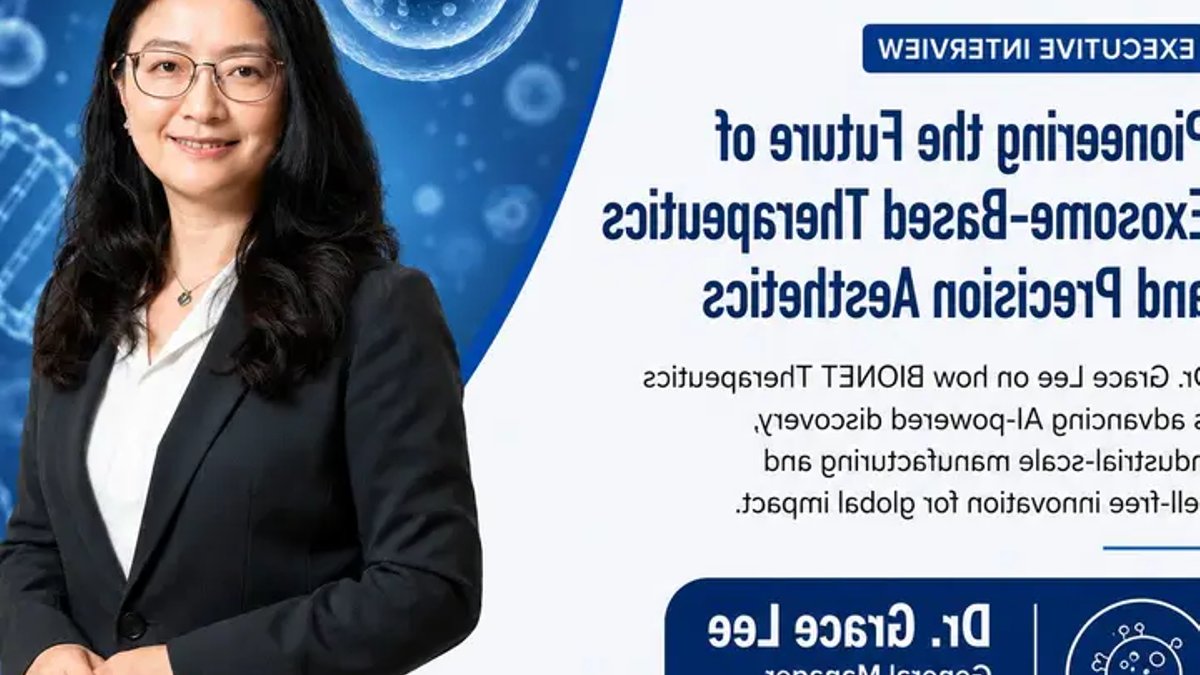
BIONET Therapeutics is positioning itself at the forefront of precision medicine with an AI-driven platform that uses exosomes—tiny extracellular vesicles—to deliver targeted therapies without the complications of living cell treatments.
Exosomes emerge as a cell-free alternative to traditional therapies
Exosomes carry the therapeutic potential of stem cells but avoid many limitations. They don’t require complex cold-chain logistics or raise concerns about immune reactions. Their stability allows lyophilization, simplifying storage and distribution.
Dr. Grace Lee, General Manager of BIONET Therapeutics, called exosomes a “convergent platform” bridging regenerative medicine and precision drug delivery. The company combines artificial intelligence, multi-omics, and scalable manufacturing to develop exosome-based treatments for applications from aesthetics to pulmonary disease.
The most immediate commercial opportunity lies in medical aesthetics. BIONET has secured regulatory approval in Taiwan for human umbilical cord mesenchymal stem cell exosomes as a cosmetic ingredient. AI maps molecular fingerprints of these exosomes, enabling precise targeting of skin aging and cellular repair pathways.
Related: Definition of Levitra
Beyond cosmetics, exosomes act as natural nanocarriers. Their ability to cross biological barriers, including the blood-brain barrier, makes them ideal for delivering mRNA, siRNA, small molecules, or proteins directly to diseased tissues. This could transform drug delivery for conditions where traditional methods fail.
AI and a global stem cell repository give BIONET a competitive edge
BIONET Therapeutics’ platform benefits from two key advantages: its biosource repository and AI-driven development. The company is part of BIONET Group, which operates the Bone Marrow / Cord Blood Registry, the largest ethnic Chinese repository and the fourth-largest worldwide. Access to diverse, high-quality stem cells provides a foundation for developing premium exosomes.
The proprietary “DeepExoMir” AI engine speeds up exosome function prediction from months to hours. By modeling experimental parameters digitally before lab validation, the system compresses development timelines. This efficiency earned the company the top spot in the biomedical sector.
Taiwan’s regulatory environment accelerates exosome development
BIONET’s progress benefits from Taiwan’s evolving biopharmaceutical ecosystem. The country’s “Regenerative Medicine Act” and “Regenerative Medicinal Products Act” provide clear frameworks for advanced therapies, including a “Conditional Approval” mechanism that allows treatments to enter the market after Phase II clinical trials. This reduces the time between research and patient access.
The company contributes to the “Taiwan Exosome Industry Mapping Project,” connecting cosmetic factories, aesthetic clinics, and pharmacies into a clinical-to-retail network. This collaboration aims to streamline commercialization of exosome-based products, from raw materials to finished therapies.
Related: NHS speeds up artificial intelligence rollout
BIONET focuses on two commercial tracks. The first targets regenerative aesthetics, where its exosomes accelerate post-procedure healing and skin barrier restoration. The second addresses unmet medical needs in ophthalmology, pulmonology, and dermatology. Its lead candidate, ExoTear, has received “Indicator Case Guidance” status from Taiwan’s Center for Drug Evaluation for treating dry eye disease. Another program, BU-01, targets idiopathic pulmonary fibrosis, a condition with a five-year survival rate lower than many cancers.
The dual approach lets the company generate revenue from high-demand aesthetic applications while advancing therapies for serious diseases. Clinical data shows exosomes’ potential in tissue regeneration, from burn scars to facial rejuvenation.
Over the next three to five years, BIONET plans to expand into markets in Japan, Malaysia, Vietnam, Colombia, Australia, and Canada. It also aims to advance its therapeutic pipelines through Taiwan’s regulatory pathways, securing early conditional approvals for lead candidates. The company will scale its manufacturing to serve B2B clients and medical centers, offering bespoke exosome formulations tailored to specific needs.
For patients with conditions like idiopathic pulmonary fibrosis or dry eye disease, these developments could mean earlier access to treatments. The broader vision is a shift from living cell therapies to precision, cell-free nanomedicine—a transition BIONET hopes to lead from Taiwan, positioning the country as a key node in the global exosome supply chain.


